Wedding Seating Chart Wording and Etiquette: Clear Display Examples
Wedding seating chart wording and etiquette help couples choose the clearest labels, table structures, and guest-friendly display rules for alphabetical charts, table assignments, and formal receptions.
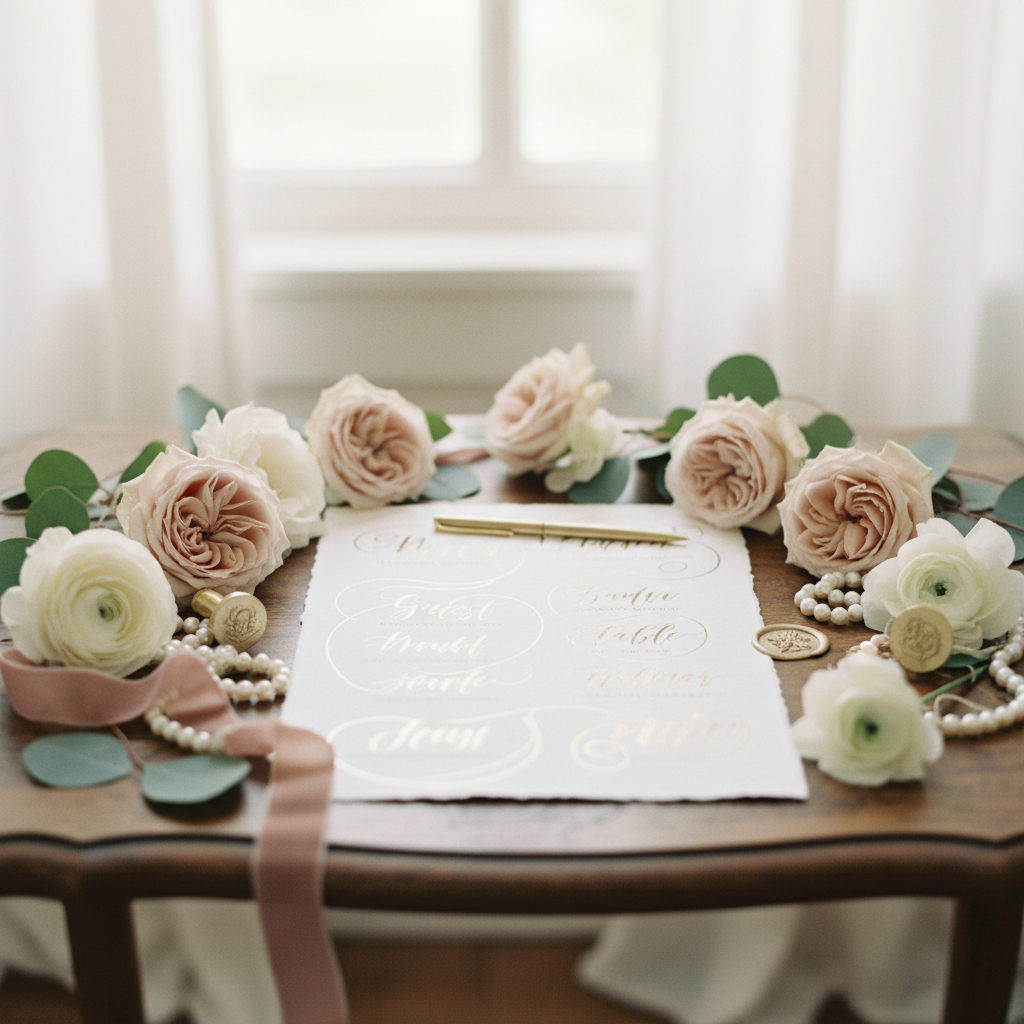
Wedding Seating Chart Wording and Etiquette: Clear Display Examples
Wedding seating chart wording and etiquette determine whether guests find their table in seconds or crowd around the sign trying to decode the layout. A seating chart is one of the most functional pieces in the reception, so wording and structure matter as much as style. If the chart looks beautiful but guests cannot scan it quickly, the sign has not done its job.
That is why wedding seating chart wording and etiquette should be planned together. The wording controls how guests read the chart. The etiquette rules control how respectful, clear, and guest-friendly the display feels. When both parts work, the sign supports the flow of the reception instead of creating a bottleneck at the doorway.
This guide covers the best wording structures, the most common etiquette questions, and the layout choices that make a seating chart easier to use in real life.
What Wedding Seating Chart Wording Needs to Do
Wedding seating chart wording has one practical goal: help guests find their seat assignment quickly and confidently.
That means the wording should:
- tell guests what the sign is
- make the organization method obvious
- avoid unnecessary extra copy
- stay readable from a short distance
The sign does not need to be poetic. It needs to be clear. You can still make it beautiful, but clarity comes first.
The Most Common Wedding Seating Chart Headings
Most wedding seating chart wording starts with a simple title.
The strongest options are:
- Seating Chart
- Find Your Seat
- Your Table Awaits
- Please Find Your Table
- Seating Assignments
If the reception is more formal, “Seating Chart” or “Seating Assignments” works well. If the event is softer or more playful, “Find Your Seat” can feel warmer without losing clarity.
Alphabetical Wedding Seating Chart Wording
Alphabetical layouts are common because they are easy for guests to scan. If you are organizing alphabetically, the wording should make that obvious.
Useful headline or support line combinations:
- Seating Chart
- Please Find Your Name Below
or
- Find Your Seat
- Names Are Listed Alphabetically
Alphabetical wedding seating chart wording works well for:
- large guest counts
- broad age ranges
- fast-moving receptions
- guests who may not know their table number yet
This format reduces congestion because guests can search by last name or first name immediately.
Table-Based Wedding Seating Chart Wording
Some couples group the chart by table rather than alphabetically. This can look elegant, but it works best when guests already understand the seating flow.
Good wording:
- Seating Chart
- Please Locate Your Table Below
or
- Your Table Awaits
- Find Your Name Under the Correct Table
Table-based wording works best for:
- smaller guest lists
- highly styled chart layouts
- receptions where guests are likely to pause and read
It is visually beautiful, but it can slow people down if the guest count is large or the names are dense.
Wedding Seating Chart Etiquette Basics
Wedding seating chart etiquette is not complicated, but a few rules matter.
Put the Chart Where Guests Need It
The sign should be near the reception entrance or transition point, not buried deeper in the room. Guests should find their assignment before they start wandering.
Make the Organization Method Obvious
If names are alphabetical, say so. If names are grouped by table, make the table structure obvious right away.
Keep Names Easy to Read
Tiny script fonts are the enemy of good seating chart etiquette. Guests need to read their name quickly.
Respect Couples and Families
Double-check the spelling, pairings, honorifics if you are using them, and table assignments. This is both a hospitality issue and an etiquette issue.
Do Not Force Guests to Crowd
A chart that is too small or too dense creates immediate frustration.
Wedding Seating Chart Wording for Formal Receptions
Formal receptions usually benefit from restrained language.
Good examples:
- Seating Chart
- Seating Assignments
- Please Find Your Name and Table Below
If you want something slightly warmer:
- Welcome to the Reception
- Please Find Your Table
Formal wedding seating chart wording should feel polished, not playful. Save extra personality for smaller supporting signs if needed.
Wedding Seating Chart Wording for Casual Receptions
Casual receptions can be a little more relaxed:
- Find Your Seat
- Your Table Awaits
- Find Your Name and Join the Celebration
- Grab Your Seat and Let’s Celebrate
Casual wording works well when the reception tone is friendly and social, but it still needs to be simple enough to scan.
Wedding Seating Chart Wording for Modern Layouts
Modern seating charts usually benefit from fewer words.
Examples:
- Seating Chart
- Find Your Seat
- Emma and James Reception Seating
If the design is strongly editorial or minimalist, let white space and layout do the work. The wording can stay spare.
Escort Cards vs Seating Charts
This question comes up often because etiquette and wording change depending on the format.
A seating chart tells guests their table in one large display.
Escort cards give each guest an individual card.
Use a seating chart when:
- you want one visual focal point
- the guest count is manageable for one display
- you prefer a clean statement piece
Use escort cards when:
- you want guests to take a card to the table
- the seating setup is more detailed
- the decor concept benefits from individual pieces
If you are comparing the two from a workflow perspective, the future comparison page planned in the map will matter. For now, your main commercial page is still wedding seating chart signs.
Best Fonts and Layout Rules for Seating Chart Etiquette
Wedding seating chart etiquette is partly typography.
Good rules:
- use highly readable body text
- reserve scripts for headings only
- keep line spacing generous
- keep table labels visually distinct
- avoid very pale contrast
This is where many charts fail. The couple chooses a beautiful font system for invitations, then uses that same ornate script for the guest list. That looks cohesive, but it hurts usability.
The better approach is to keep the guest names clean and readable while using the decorative font only for the sign title or one accent line.
How to List Names
You have a few common options.
First Name + Last Name
This is the clearest default and works for most weddings.
First Name Only
Only do this if the guest count is small and name duplication is unlikely.
Mr. and Mrs. / Honorifics
Use only if the event is formal and the naming choice feels consistent with the couple’s overall style. Many modern couples skip honorifics entirely.
Couples on One Line vs Separate Lines
Either can work. If you have the room, one line per couple is often cleaner. If the design is dense, separate lines may scan faster.
Wedding Seating Chart Etiquette for Large Guest Counts
Large guest lists magnify every design mistake.
For larger receptions:
- organize alphabetically
- make the headline short
- use bigger boards or multiple panels
- leave wider spacing between letter sections
- test the sign at actual print size
If the chart is too dense for one board, split it. Two or three clean panels are better than one overloaded sign. Good etiquette means designing for guests, not forcing the whole list into one “pretty” layout.
Wedding Seating Chart Etiquette for Families and Kids
Think carefully about grouped families, children, and blended households. Guests should not have to guess whether children are seated with parents or whether plus-ones are implied.
Double-check:
- child names
- dietary-note tables if relevant
- stepfamily relationships
- older relatives who may need easier access
This is not visible in the wording itself, but it is part of seating chart etiquette because the sign presents those assignments publicly.
Common Wedding Seating Chart Mistakes
Tiny Text
This is the most common failure. Guests cannot read it, so a line forms.
No Organizational Cue
If guests do not know whether the chart is alphabetical or table-based, they waste time figuring it out.
Too Much Decorative Noise
Heavy florals, low-contrast backgrounds, and ornate dividers make scanning harder.
Poor Placement
If guests discover the chart after they are already inside the room, traffic backs up.
Not Proofreading the Guest List
One misspelled last name can create disproportionate frustration.
Better Wedding Seating Chart Wording by Use Case
Large Formal Reception
- Seating Chart
- Names Are Listed Alphabetically
Garden or Romantic Reception
- Find Your Seat
- Please Find Your Name Below
Modern Minimal Reception
- Seating Chart
Table-Based Editorial Display
- Your Table Awaits
- Please Locate Your Name Below
The less obvious the layout, the more helpful the support line becomes.
How the Seating Chart Fits the Rest of the Sign Suite
A seating chart should feel visually related to the welcome sign, bar menu sign, and cards and gifts sign, but it should not copy their typography rules exactly. Utility signs need stronger readability.
That means you can keep:
- the same palette
- the same frame logic
- the same headline font
while changing:
- guest-list font size
- body font choice
- line spacing
That balance keeps the suite cohesive without hurting usability.
Turning Wording and Etiquette Into a Better Seating Chart
The easiest way to get this right is to start with the actual guest task:
- how will guests search
- how many names are there
- where will they encounter the sign
- how quickly do they need to move
Once those answers are clear, the wording becomes easy. Use a short title, make the structure obvious, and design the chart for human scanning instead of for a mockup.
Use AI Wedding Signs to build a seating chart that matches your suite while still handling the real etiquette job of the sign. Then pair it with your wedding seating chart signs page and welcome sign wording guide to keep the whole arrival zone cohesive and guest-friendly.
Sources
- Title: 30 Creative Wedding Signs That Will Welcome or Direct Your Guests Publisher: Martha Stewart Publication Date: May 12, 2023 URL: https://www.marthastewart.com/7934526/signs-real-weddings
- Title: 16 Times Event Wayfinding Perfectly Blended Style and Function Publisher: BizBash Publication Date: January 21, 2026 URL: https://www.bizbash.com/event-design/standout-directional-signage-at-events
- Title: 2010 ADA Standards for Accessible Design Publisher: ADA.gov Publication Date: September 15, 2010 URL: https://www.ada.gov/law-and-regs/design-standards/2010-stds/
Make It With AI Wedding Signs
Create Your Sign
Use AI Wedding Signs to turn this guide into a polished sign with editable copy, fast revisions, and print-ready export sizes.
Keep Exploring
Wedding Seating Chart Signs
Move from etiquette and wording into the guest-facing seating chart format itself.
Seating Chart Tool vs Sign
Separate the planning workflow from the printed display before you finalize the format.
Create a Seating Chart Sign
Build a clear, print-ready seating chart once your guest assignments are final.